
240 E-Buses, Smarter Routes: Chhattisgarh Draws Up Public Transport Overhaul
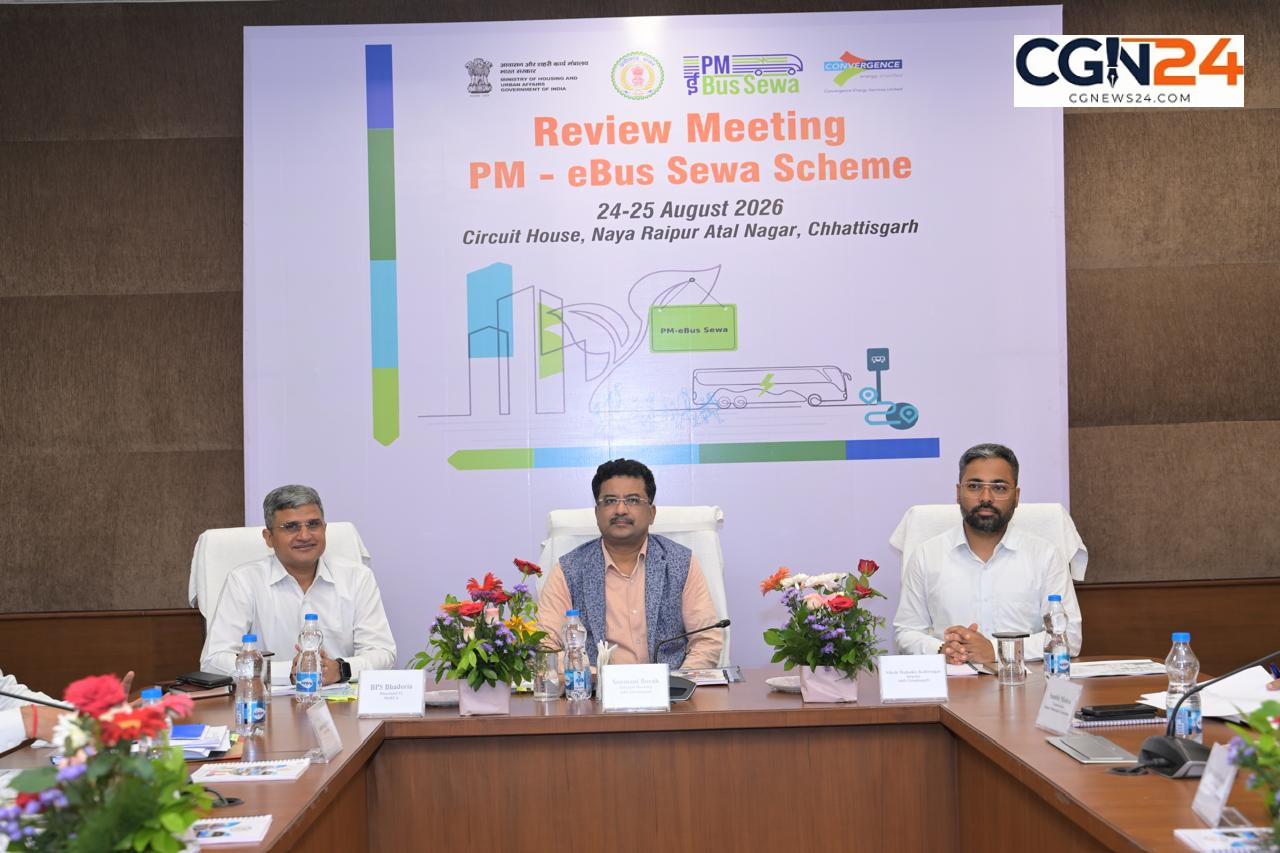
Raipur, Bilaspur, Durg and Korba to get 240 electric buses; route planning, depots, charging stations and real-time monitoring system to be developed
Raipur: Public transport in four major cities of Chhattisgarh is set for a major transformation with the state moving ahead with the implementation of the PM-eBus Sewa scheme. A total of 240 electric buses have been approved for Raipur, Bilaspur, Durg and Korba, with authorities now working on detailed route plans, depots, charging infrastructure and technology-driven monitoring systems.
A high-level meeting to review the implementation of the PM-eBus Sewa scheme was held in the presence of Urban Administration and Development Department Principal Secretary Sonmoni Borah and Ministry of Housing and Urban Affairs (MoHUA) Director Bhanu Pratap Singh Bhadoria.
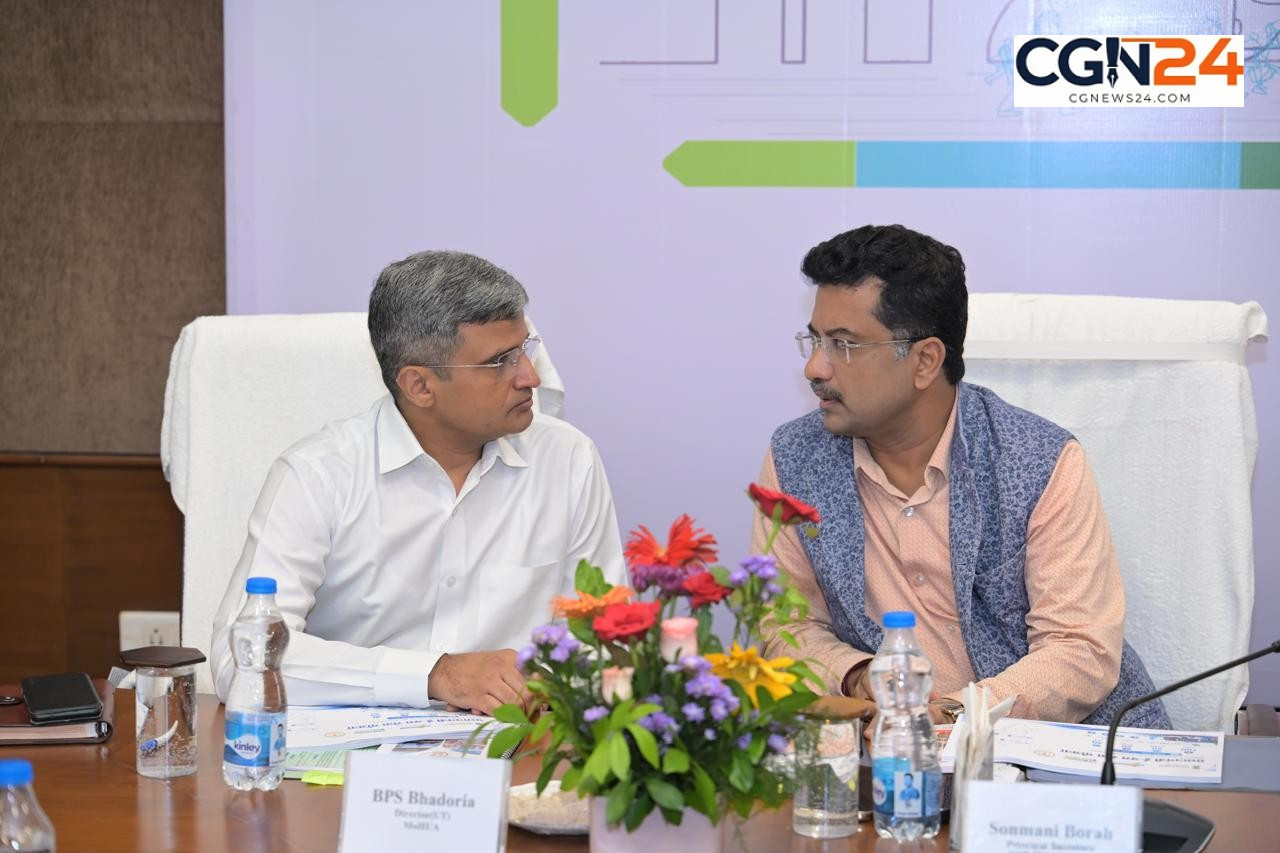
CEO of SUDA Sumeet Agrawal informed the meeting that 240 electric buses have been sanctioned for the four cities under the scheme. The initiative aims to provide citizens with cleaner, modern and better-connected public transport.
Routes to link schools, hospitals, markets
The authorities have been directed to prepare bus routes based on the actual transportation needs of each city and commuter convenience. Special emphasis has been laid on connecting schools, colleges, hospitals, major markets, important institutions and other public-use locations through the e-bus network.

Officials have also been asked to prepare both short-term and long-term route plans and conduct phased studies of the proposed routes. Passenger demand, expected ridership, distance and connectivity will be taken into account before routes are finalised.
High-demand areas will be prioritised for developing routes according to passenger requirements.
Real-time tracking and monitoring planned
The state also plans to use technology extensively to improve the efficiency of the e-bus service. Officials were directed to ensure that citizens can easily access information on the number of buses operating, routes being served and route-wise details.
A technology-based Command and Control System will be developed for real-time monitoring of bus operations, routes, passenger numbers and other key parameters.
Depots and charging stations to be developed simultaneously
The government has directed authorities to work simultaneously on the infrastructure required for operating the electric buses.
This includes bus depots, charging stations, bus stops and other supporting infrastructure. While developing depots, authorities have been asked to keep future expansion of the e-bus fleet in mind and ensure adequate capacity.
The location of depots and charging stations will be finalised after assessing land availability and operational requirements.
Coordination with NHAI, Railways and other concerned departments has also been stressed to ensure that necessary approvals and technical processes are completed without delay.
October 30 deadline set for key targets
The meeting also reviewed the timeline for implementation of the scheme. Officials were asked to maintain the required pace to achieve the targets related to works and routes by October 30, while planning subsequent activities keeping the November 1 target in view.
The possibility of outsourcing certain route and operational activities will also be examined.
Special bus service for women under consideration
The meeting also discussed preparations for launching a special bus service for women. Authorities will examine suitable routes and operational arrangements keeping women’s convenience and safety in mind.
PPP model for bus stops
Development of bus stops was another key area discussed during the meeting. Their locations will be selected based on passenger demand, convenience and route connectivity.
The possibility of developing passenger facilities at bus stops through the Public-Private Partnership (PPP) model will also be explored.
City-specific strategy for four cities
Officials stressed that the same transport model should not necessarily be applied uniformly across all four cities. Instead, city-specific requirements, passenger demand and available resources will be assessed before deciding priorities.
Principal Secretary Sonmani Bora said that route planning, bus operations, depots, charging infrastructure, bus stops and the Command and Control System need to be developed as an integrated public transport network.
He also directed officials to identify potential bottlenecks related to land, depots, charging facilities, routes and operations in advance and resolve them within the stipulated timelines.
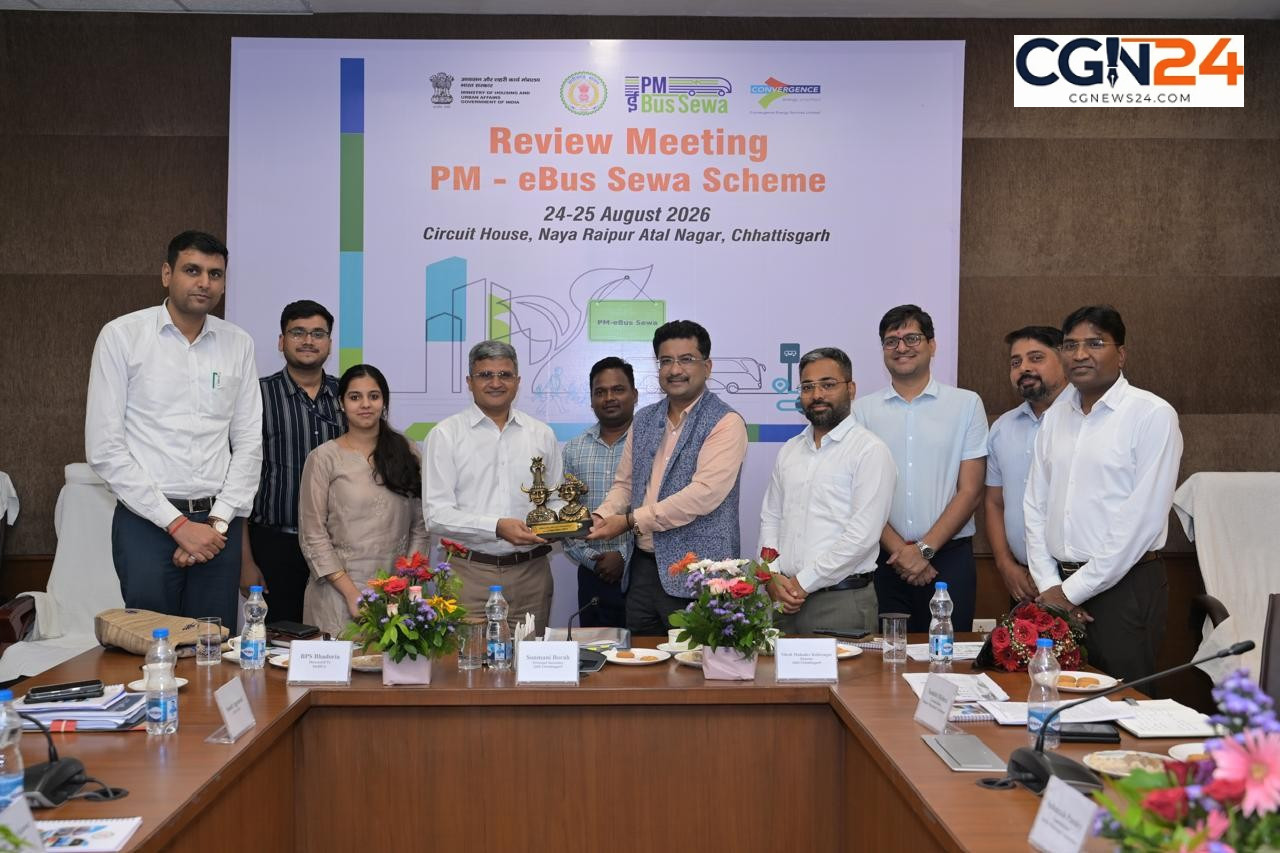
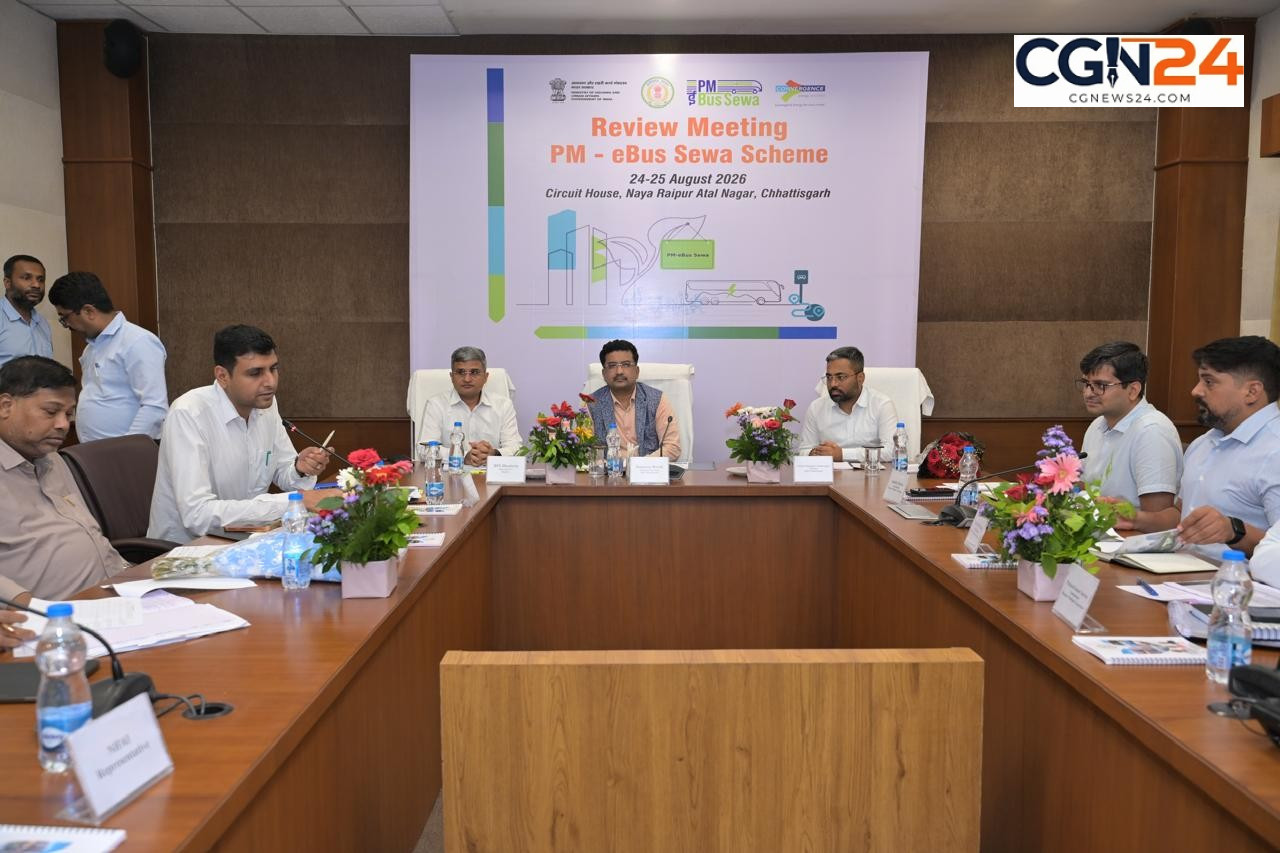
The meeting was attended by Director of Urban Administration Nilesh Mahadev Kshirsagar, SUDA CEO Sumeet Agrawal, CSPDCL Managing Director Bhim Singh Kanwar, Raipur Municipal Corporation Commissioner Sambit Mishra, Korba Municipal Commissioner Ashutosh Pandey, Bilaspur Municipal Commissioner Prakash Kumar Sarve, NHAI DGM Nitin Kumar Gupta, MoHUA officials and representatives from the four cities.
Kshirsagar said coordinated efforts were being made to implement the PM-eBus Sewa scheme in line with the transportation needs of citizens. The objective, he said, was to develop e-bus services as a safe, convenient, modern and efficient public transport option for the people of Chhattisgarh.


